FluxAir
A Calm Flight Booking Experience for Anxious Travelers
Tools Used
Role
Figma
End-to-End Designer

The most stressful part of travel isn't the destination.
It's the moments in between.
The night before a flight.
The first steps inside an airport.
The pause between checking in and figuring out where to go next.
Booking a flight is easy.
What often gets overlooked is the experience that follows, when users are left navigating uncertainty, signs, and steps without clear guidance.
This project began by focusing on those moments.

The Moment this project begins
Heard From the Other Side of Security
Real experiences shared by travelers online the anxiety, the confusion, the moments that existing apps never addressed.
Airports don't fail on screen. They fail between them.
The Problem
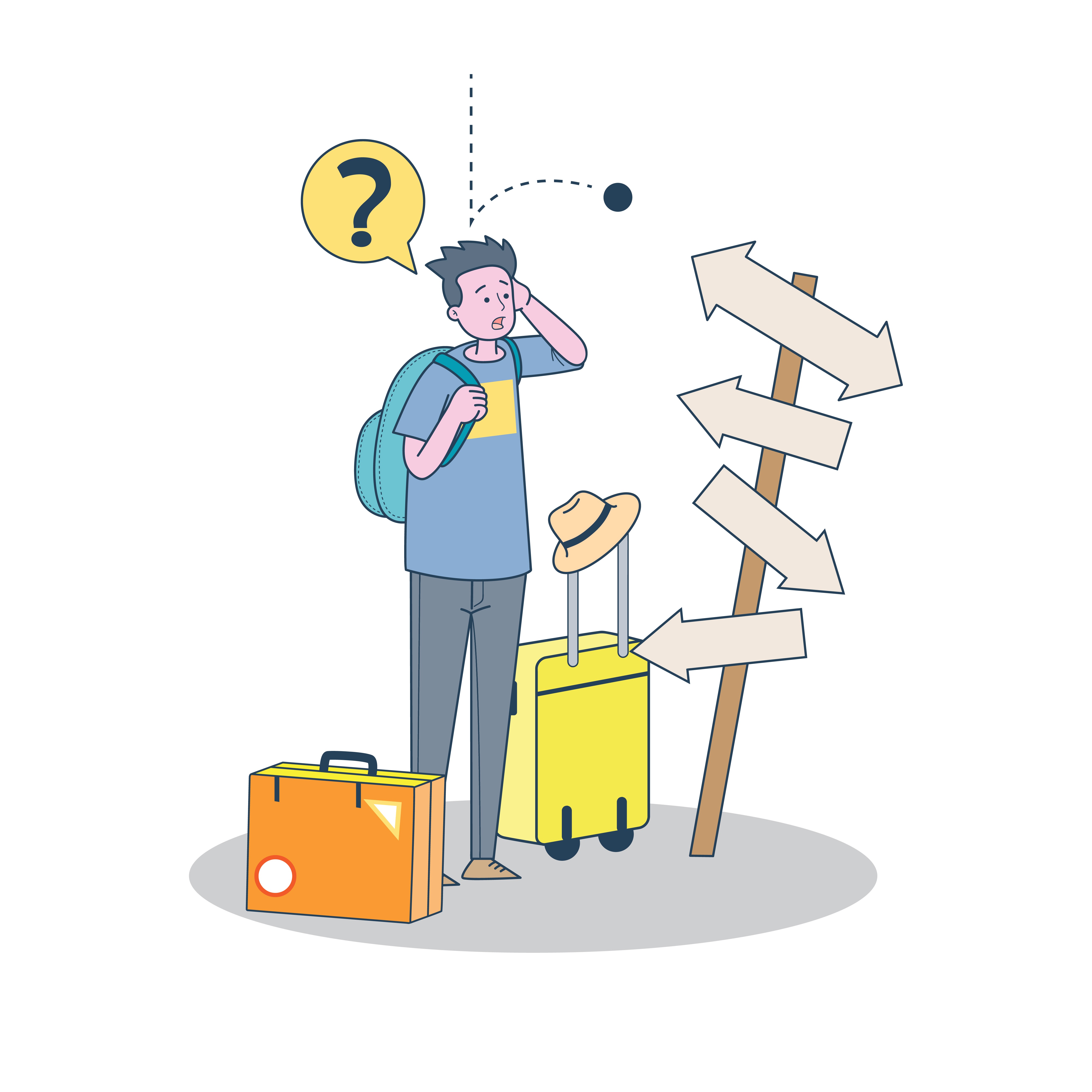
Airports are designed to move people - but not to guide them.
Once travelers enter the Terminal, the experience fragments Screens Change
Signals Drop
Signs Overwhelm
Staff aren't always accessible
For first-time, occasional, and anxious travelers, navigation becomes a guessing game especially between key moments like check-in, security and boarding. Most travel apps stop being useful inside the airport.
And when connectivity fails, guidance disappears completely. This creates a gap - not in information, but in continuous support.
Where the App Ends, the Airport Begins
Airports are not screen-based experiences.
They are physical, crowded, noisy, and time-sensitive environments.
While mobile apps help users plan and book, they often stop supporting them the moment they step into the terminal. This is where FluxAir jumps in to resolve this problem.
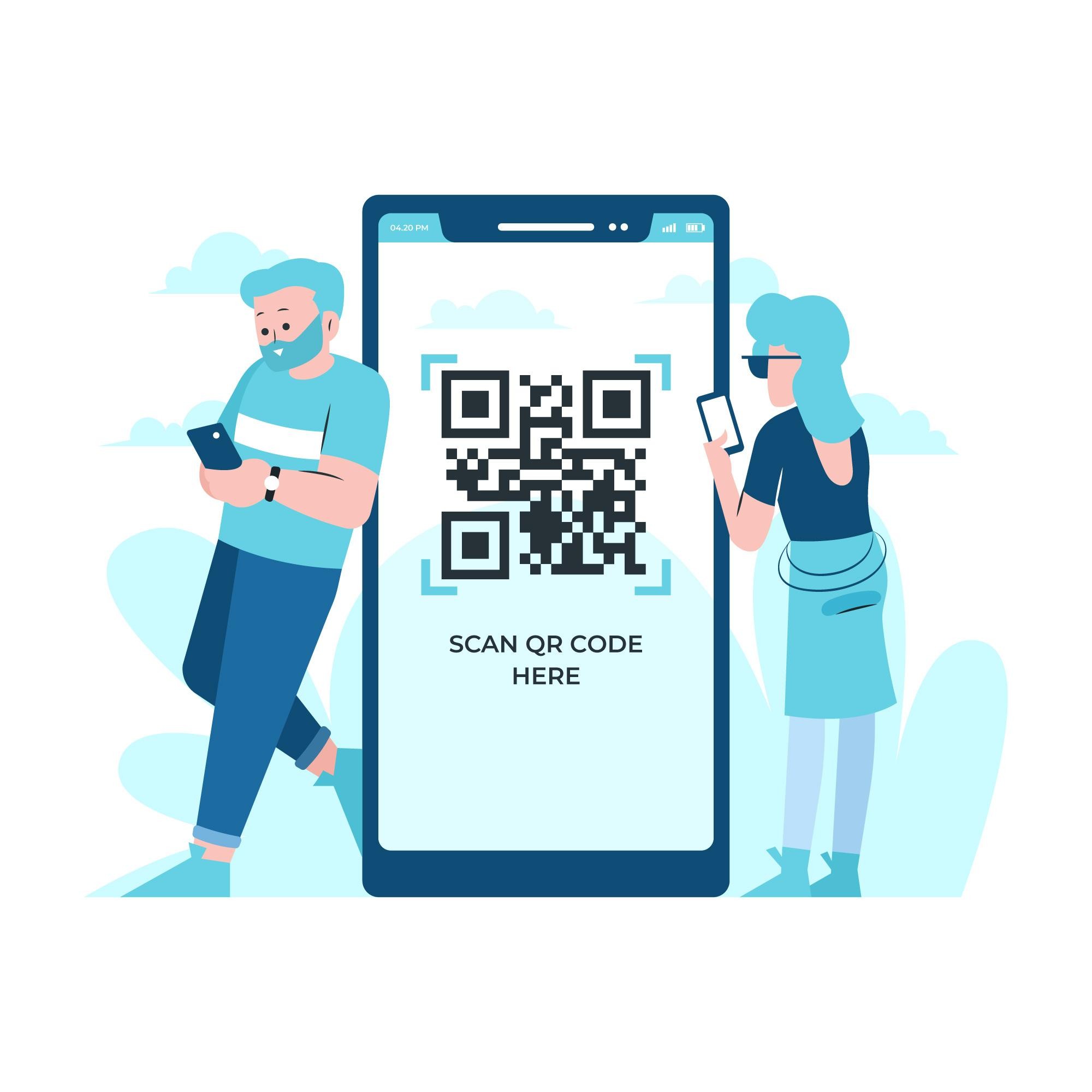
FluxAir has a Dynamic QR Code that acts as the passenger's digital handoff from mobile experience to On-Ground Airport Systems.
Zero Learning Curve
No downloads, no searching just scan and go.
Location-aware design
Scanning at different airport points unlocks context-specific guidance.
Supports both first-timers and frequent flyers
Guidance adapts without forcing a one-size-fits-all flow.
Works with Environment, no against it
QR codes can exist at entrances, security checks, and info desks
Why QR-Based navigation?
Beyond the Screen

Entrance
Check-in
Security Check
Boarding gate
You've entered the airport.The questions start.
“Where do I go?” “Is this the right terminal?”
Scans the QR at entrance
Confirms terminal + next step
No wandering. No guessing
What the app does ?

This is where things usually slow down.
Long Queues, unclear counters, too many boards
Guides to correct counter
Explains process in simple steps
What the app does ?

The most confusing 5 minutes of the journey.
Rush changes. Signs overwhelm.
Prepares users for what's next
Reduces last-minute confusion
Keeps flow moving.
What the app does ?
You're almost there. But gates change.
And no one wants to sprint at the last minute.
Confirms gate & timing
Sends calm, contextual remainders
Ends the journey on a confident note
What the app does ?
For frequent flyers, airports may feel routine.
But for first-time travelers, anxious flyers, elderly passengers, or anyone under time pressure, airports are overwhelming physical environments filled with uncertainty.
Traditional navigation tools fall short because airports aren’t static digital spaces they’re noisy, crowded, and constantly changing.
QR-based navigation bridges this gap by connecting digital guidance to real-world moments, offering support exactly when and where users need it most.
Why this matters ?
Design decisions, trade-offs and outcomes
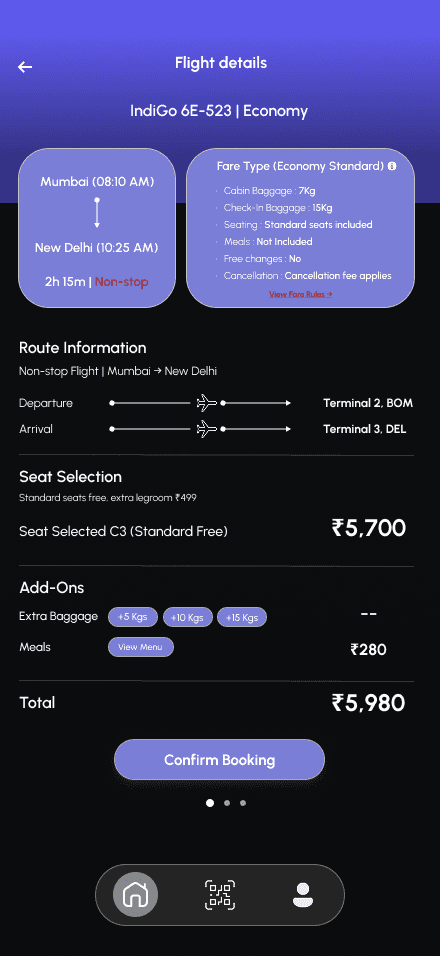
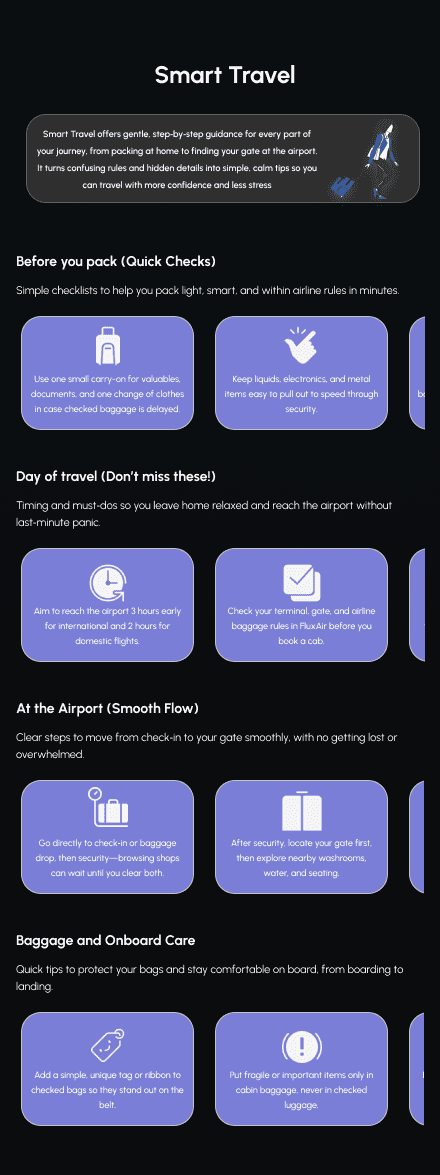
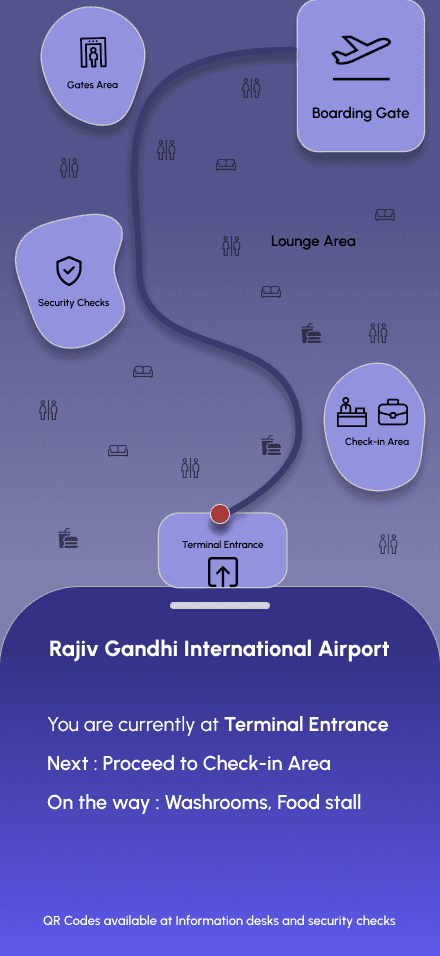
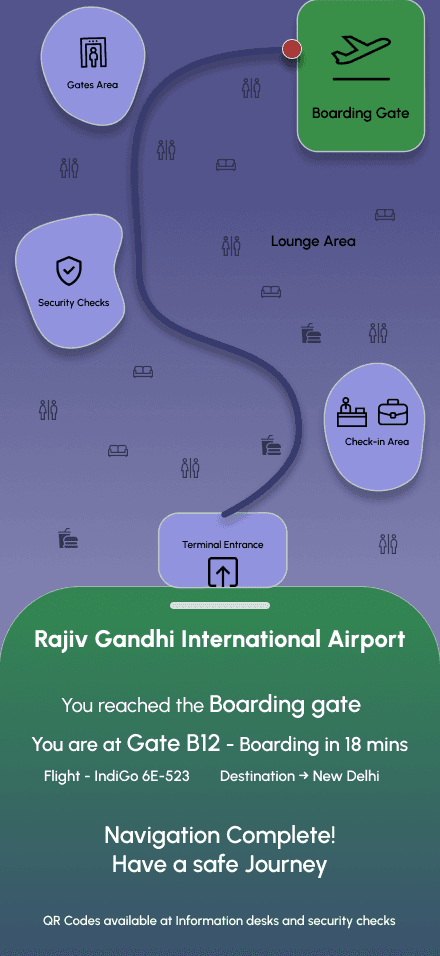
The experience doesn’t end at arrival, it ends when anxiety drops.
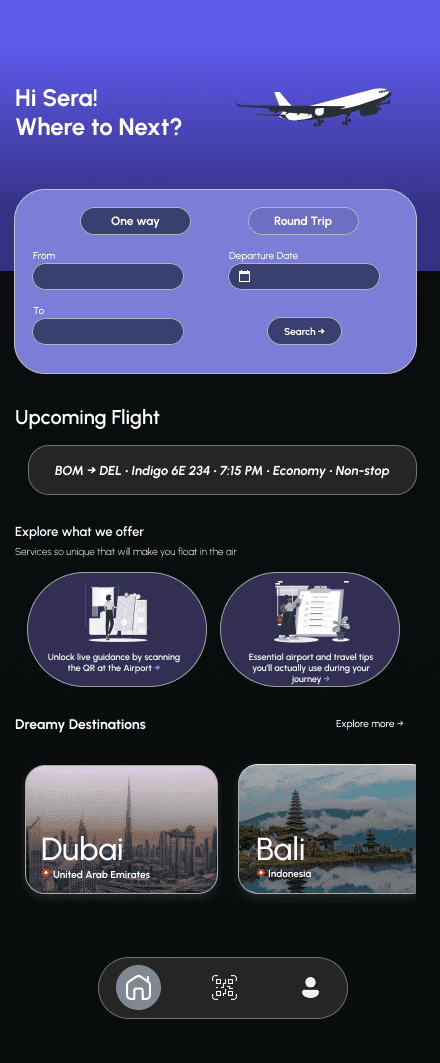
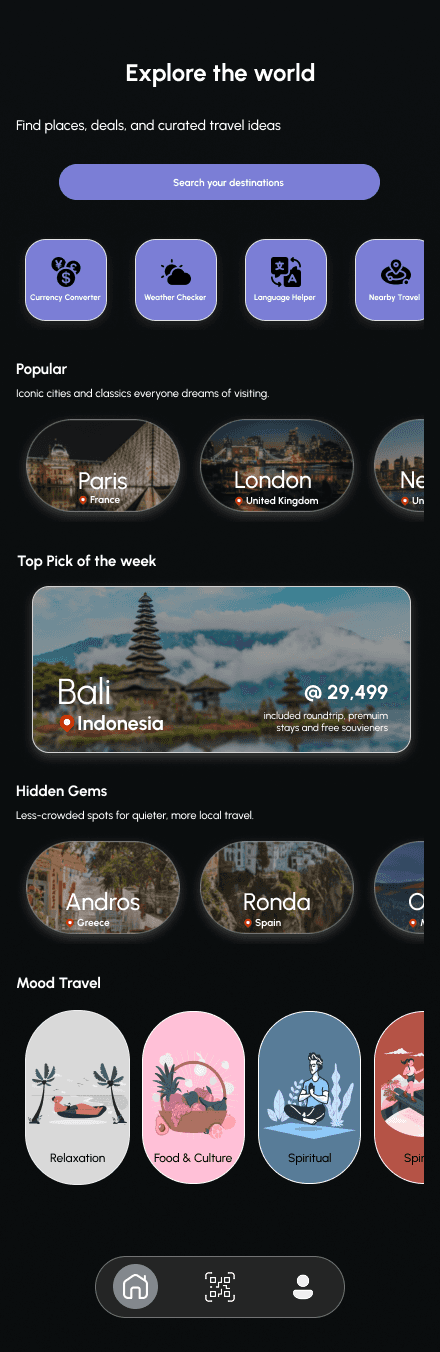
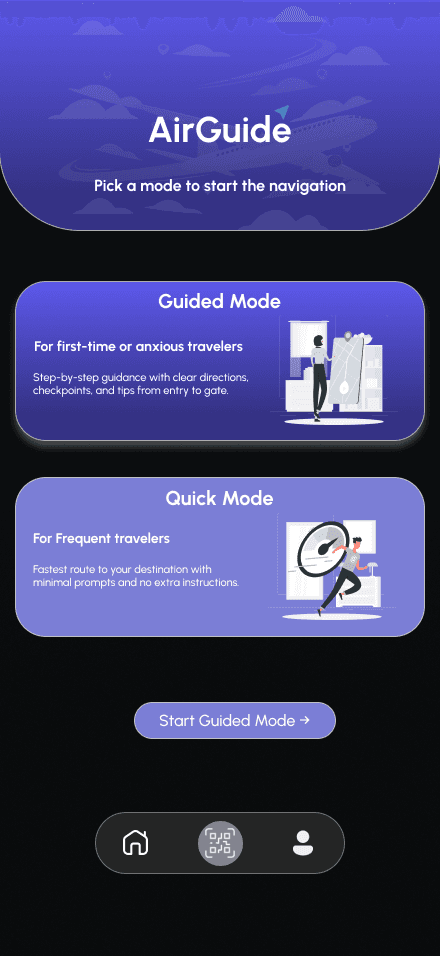
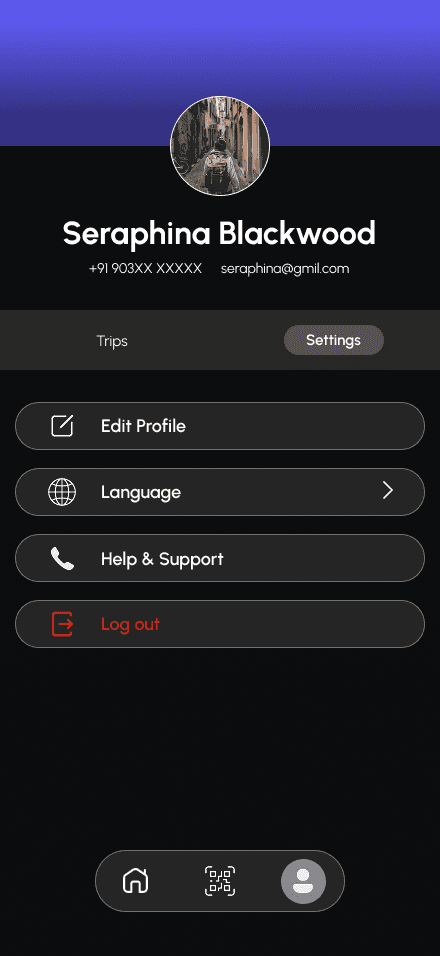
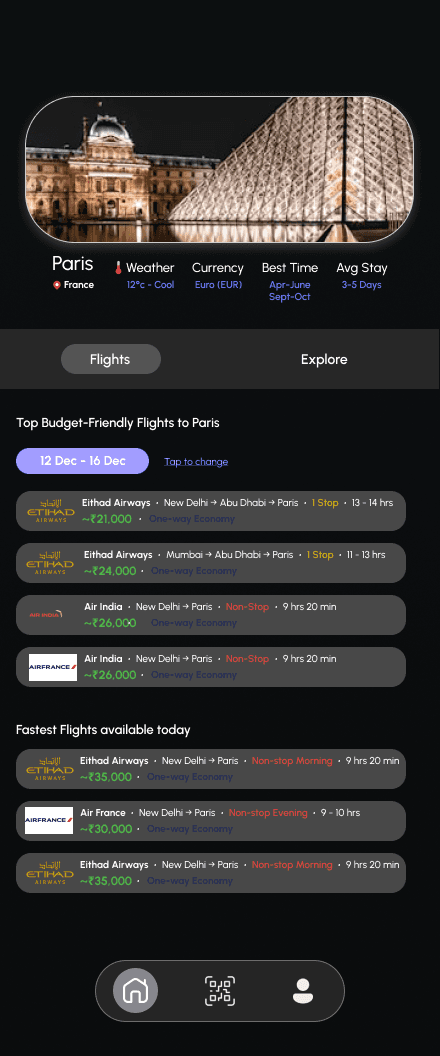
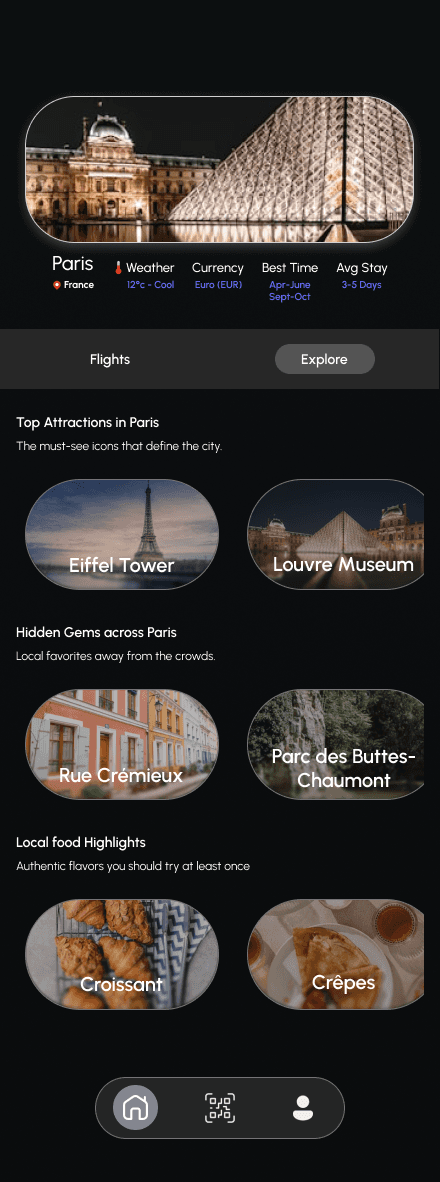
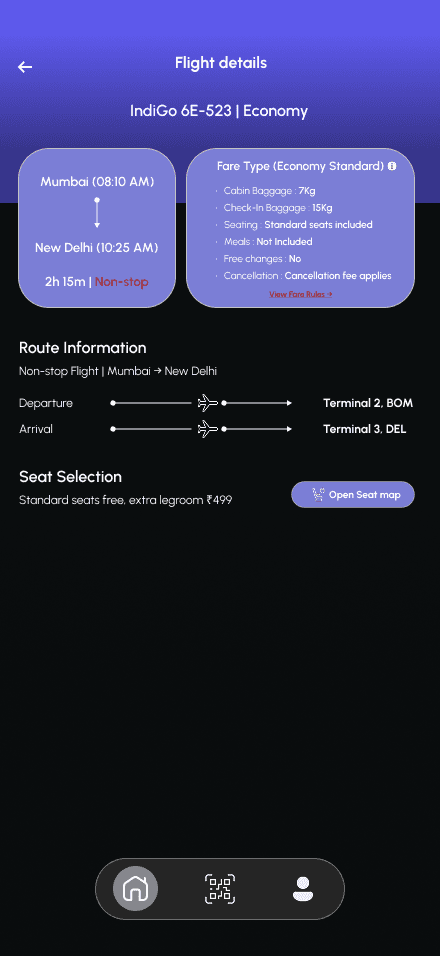
UI Show case
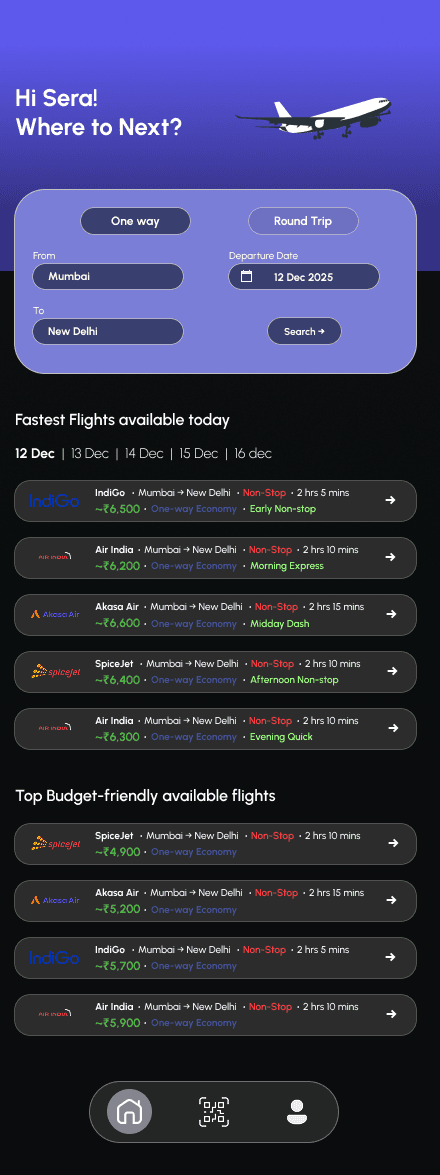
What This Could Change at Real Airports
The real impact isn’t faster boarding. It’s calmer people
If implemented at scale, QR-based navigation could meaningfully reduce help desk dependency, fewer "where is Gate 42?" moments means staff redirected to higher value support.
For airlines, reduced passenger anxiety translates directly to smoother boarding, better on-time performance, and stronger brand recall as a genuinely helpful travel companion not just a ticket seller.
And for the people who matter most first-time flyers, elderly passengers, neurodivergent users, and non-native speakers it means arriving at the gate feeling capable instead of lost.
Reflection
This project taught me that UX doesn't live only inside apps, it lives in moments of confusion, stress, and movement. Designing for airports pushed me to think beyond screens and into physical spaces, behaviors, and emotions.
Most importantly, this reshaped how I see my role as a designer. I'm not just designing interfaces, I'm designing clarity in chaotic moments, calm in unfamiliar places, and experiences that respect the fact that users are human before they are users.
BookNest
Hold & Heal
FluxOps
A QR-based airport navigation app for first-time and anxious travelers who go blank the moment they land.
Problem : Airports assume everyone already knows how airports work. They don't.
My role : End-to-end concept, user research, flow mapping, visual design, QR trigger system design.
Key decision : Navigation starts at the gate scan, not a search bar; removing the moment where anxious travelers freeze.
Honest outcome : Concept project, but it revealed a systems thinking gap in how airports design for cognitive load.
Summary Card